How to Choose the Best Carton Box for Your Business Needs?
Choosing the right carton box can significantly impact your business. According to industry expert Mark Thompson, "The right carton box is not just about protection; it's about presentation." His insight highlights the dual role of carton boxes in both safeguarding products and showcasing a brand's identity.
In a world where first impressions matter, selecting an appropriate carton box is crucial. A well-chosen box prevents damage during shipping and creates a memorable experience for customers. However, many businesses overlook the importance of this choice. They often settle for standard boxes, ignoring the specific needs of their products and branding.
It's easy to make assumptions about what a carton box should be. But different products have unique requirements. Flimsy boxes may lead to product damage, while oversized boxes waste space and increase costs. Reflecting on these choices is vital for long-term success. Investing time in selecting the right carton box can make a difference in your business’s reputation and bottom line.

Understanding the Different Types of Carton Boxes Available
Choosing the right carton box for your business can be challenging. There are various types of carton boxes, each designed for specific purposes. Understanding these options is crucial for making an informed decision.
One common type is the regular slotted carton, often used for shipping. It is economical and easy to assemble. Another option is the die-cut box. This type can be customized and fits unique products better. It provides added protection but may cost more. For fragile items, consider using heavy-duty boxes. These have a higher thickness and can withstand rough handling.
Business needs may change. Relying on one type of box might not be sufficient. You might find that some boxes perform better in specific situations. Experiment with different kinds to see how they meet your requirements. Pay attention to the material strength as well. Sometimes, what seems durable may not hold up as expected. Always be prepared to adjust your choices based on real-world usage.
How to Choose the Best Carton Box for Your Business Needs?
| Box Type |
Material |
Dimensions (inches) |
Weight Capacity (lbs) |
Use Case |
| Regular Slotted Container (RSC) |
Corrugated Cardboard |
12 x 12 x 12 |
30 |
General Shipping |
| Die-Cut Box |
Cardboard |
10 x 10 x 4 |
15 |
Retail Packaging |
| Full Overlap Slotted Container (FOL) |
Heavy-Duty Corrugated |
14 x 14 x 14 |
50 |
Heavy Items Shipping |
| Tube Box |
Cardboard |
6 x 6 x 36 |
20 |
Posters, Artwork |
| Mailing Box |
Kraft Cardboard |
10 x 8 x 6 |
25 |
E-commerce Shipping |
Assessing the Size and Weight Requirements for Your Products
When assessing the size and weight requirements for your products, precision is key. Start by measuring your products accurately. Length, width, and height are crucial factors. If your product is bulky yet lightweight, your packaging must reflect that. Oversized boxes may lead to damage during transit. Efficient use of space can save costs.
Tips: Use a scale to weigh your products. This will help you choose the right box. Ensure your chosen carton can handle the weight. Lightweight items may need different handling than heavier goods.
Think about your shipping process. Dimensions affect shipping costs significantly. A tighter fit reduces wasted space and enhances product protection. Consider the fragility of your product too. You'll need sturdy cartons for delicate items.
Tips: Test different box sizes with your products. It’s beneficial to see what feels secure. Not all products will fit perfectly in standard sizes. Sometimes, custom boxes are worth the investment. A little extra effort can yield substantial returns.
Assessing the Size and Weight Requirements for Your Products
Evaluating Material Strength and Durability for Transportation
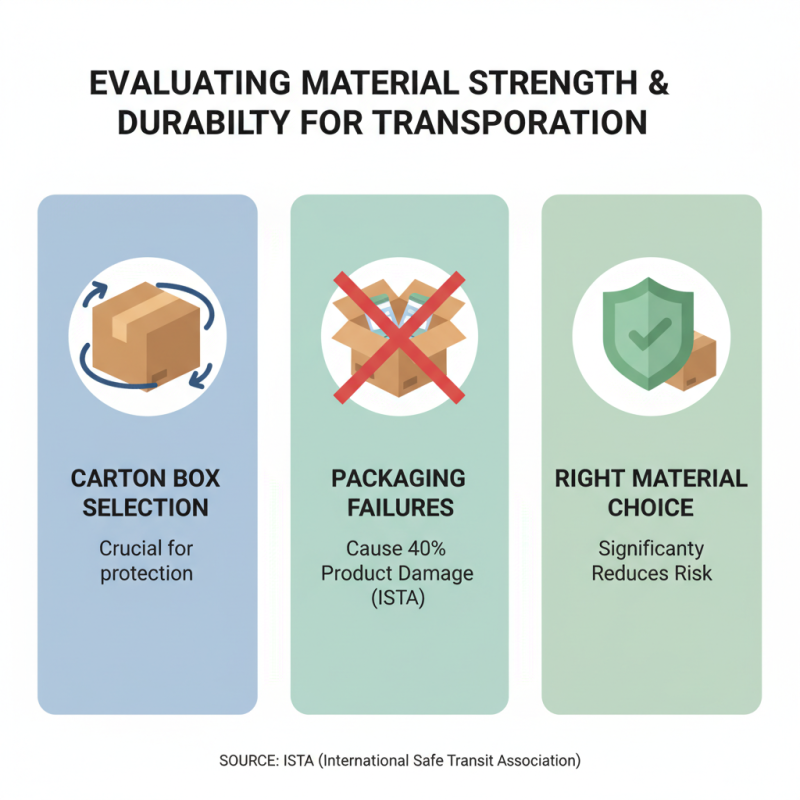
When choosing a carton box for transportation, material strength and durability are crucial factors. According to the International Safe Transit Association (ISTA), packaging failures account for nearly 40% of product damage during shipping. Selecting the right material can significantly reduce this risk.
Corrugated cardboard is often preferred due to its excellent strength-to-weight ratio. It can withstand considerable pressure, making it suitable for heavy products. Studies show that double-wall corrugated boxes offer 32% more compression strength than single-wall boxes. However, it's essential to consider that overpacking can lead to unexpected failures. Always ensure that the box is not excessively packed, as this can compromise its structural integrity.
Additionally, environmental factors can affect durability. Temperature fluctuations and humidity can weaken box strength, causing breakage. A report from the Packaging Association highlights that 25% of companies experience increased returns due to box failure in adverse conditions. Thus, investing in moisture-resistant coatings can provide extra protection. This approach not only strengthens packaging but also enhances overall reliability during transport.
Considering Cost-Effectiveness and Budget Constraints
When selecting a carton box, cost-effectiveness is crucial. Understanding your budget constraints helps streamline your choices.
High-quality boxes can cost more upfront. However, they may save money in the long run. Durable boxes reduce damage during shipping. This minimizes losses and enhances customer satisfaction.
Consider the size and design of the box. A perfectly sized box ensures better space utilization. This keeps shipping costs low.
Don't overlook the importance of bulk purchasing. Ordering in larger quantities can significantly reduce the per-unit cost. Yet, be cautious not to overstock.
Unsold inventory ties up capital and storage space.
Evaluate your specific needs. Are you shipping fragile items or heavy products? Your material choice might differ based on this.
Think about the sustainability factor too.
Eco-friendly options can appeal to customers. Yet, they often carry a higher price tag. Balancing cost and environmental impact takes careful consideration.
Identifying Customization Options for Branding and Functionality
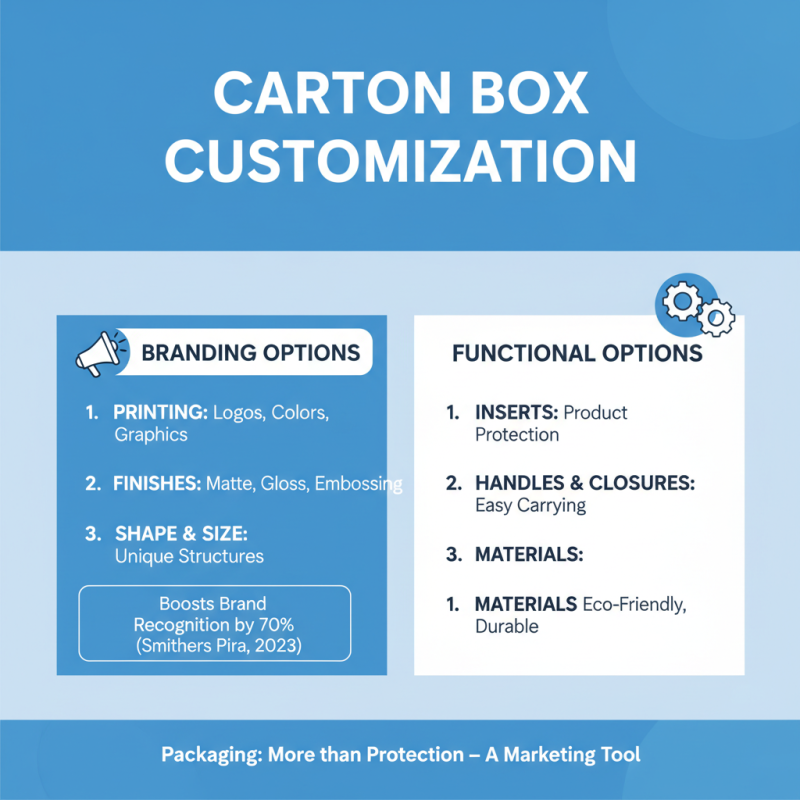
When selecting carton boxes for your business, customization plays a crucial role. Packaging is not just a protective vessel; it is also a branding tool. According to a 2023 industry report by Smithers Pira, custom packaging can enhance brand recognition by up to 70%. This highlights the importance of personalization in carton box design.
Consider materials and shapes when customizing boxes. For instance, employing corrugated cardboard adds strength. A compelling shape stands out on retail shelves. However, many businesses overlook the dimensions. Incorrectly sized boxes can lead to product damage and increased shipping costs. The right fit can save up to 30% in shipping expenses, as stated by the Packaging Institute.
Graphics and colors are equally vital. Unique designs can reinforce brand messaging. Yet, it’s easy to miss the balance between aesthetics and functionality. Bold colors may attract attention, but if they distract from product visibility, the goal is lost. Brands must continually assess their packaging strategies. Testing various designs can reveal valuable insights.